
November 4, 2026·5 min read
Should I go independent as a hairstylist in Massachusetts?
The quick answer
How many Boston-area stylists work for themselves?
The U.S. Census Bureau counted 7,316 beauty salon businesses with no employees in the Boston metro in 2023, up 4.9% from 6,976 in 2022, alongside 2,025 salons with staff. Bex says that means independent work is common there, and the next step is checking your own numbers.
Learn about bex+Co.® membershipHere’s how a stylist on commission, about 2 years in, described it on Reddit:
“I have a list of clients I feel would follow me even after my boss tries everything to keep them, but I am still so scared to make the jump.”
If that’s you, the fear is normal. You’ll probably never feel 100% ready. I tell stylists to stop waiting for the fear to leave and to answer a few hard questions instead. If the answers hold up, you go, even if you go scared.
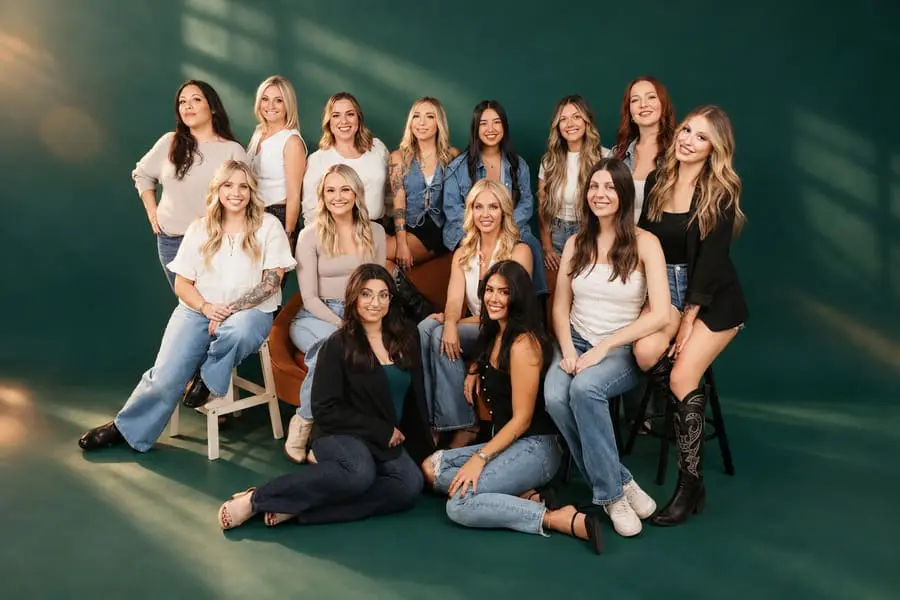
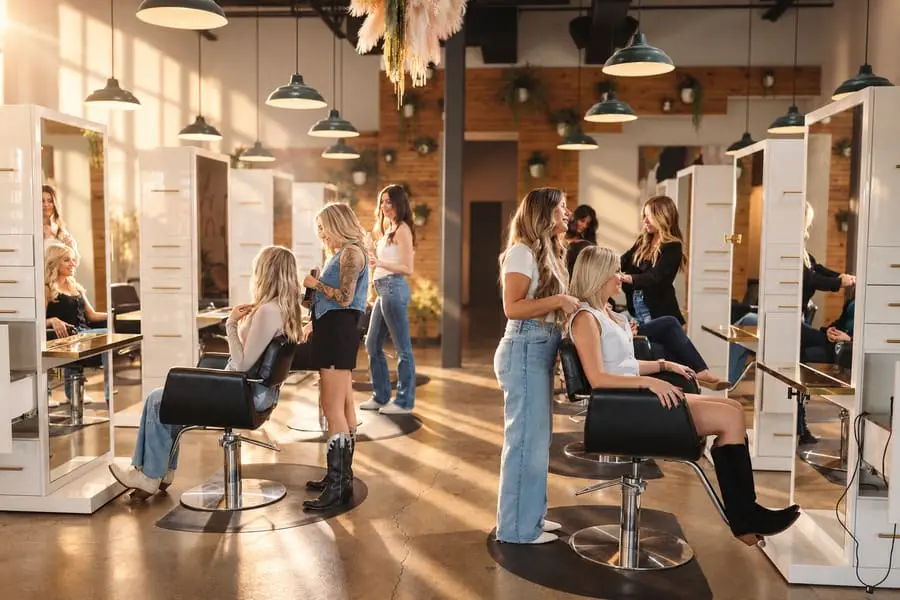
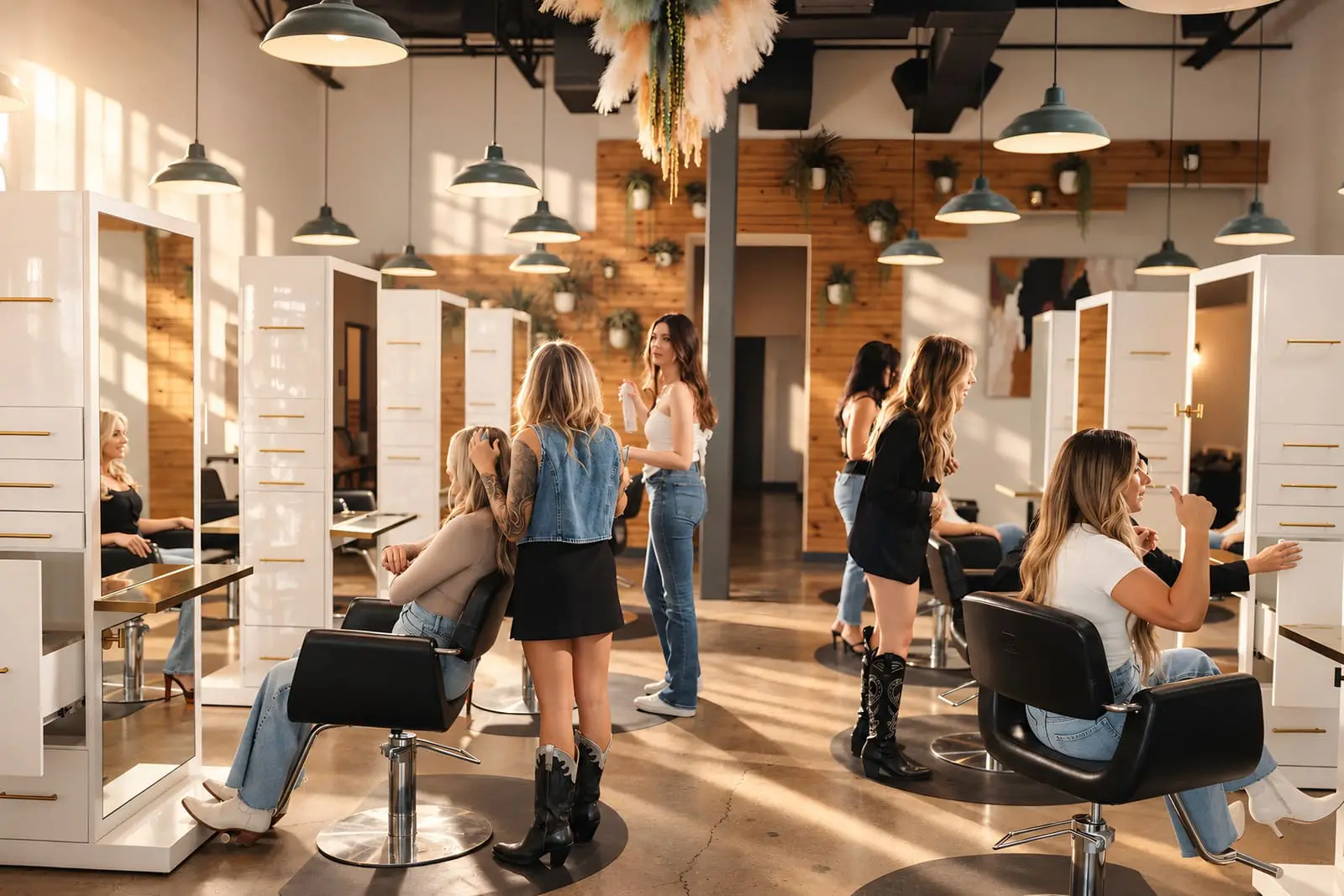
I’m the founder and owner of bex+Co.®, a Shared Workspace Salon™. Independent beauty pros share one open floor there, each running their own book. We have 7 salons around Austin, and Boston-area salons are coming soon. Over the years I’ve helped thousands of stylists make this call. Here are the 6 questions I’d want a Boston-area stylist to answer, with the local numbers that help.
1. Is going out on your own normal around here?
Yes, and it’s growing. The U.S. Census Bureau’s Nonemployer Statistics counted 7,316 beauty salon businesses with no paid employees in the Boston-Cambridge-Newton metro in 2023. That’s up from 6,976 in 2022, a gain of 340 in 1 year, or 4.9%. Nationally, almost half of hairstylist jobs are self-employed, and I explained what that 48% really counts.
On the Massachusetts side of the metro, they spread out like this:
| Massachusetts county | 1-person beauty businesses, 2023 |
|---|---|
| Middlesex | 1,795 |
| Essex | 1,694 |
| Suffolk | 1,013 |
| Norfolk | 950 |
| Plymouth | 823 |
Those 5 counties add up to 6,275. The rest of the metro’s 7,316 sits in 2 New Hampshire counties. Essex comes in close behind Middlesex.
2. What is that 7,316 really counting?
Before you repeat the number to anyone, know 3 things about it:
- It counts businesses, which aren’t always people. A stylist can file more than 1, and an owner with no payroll is counted too. It’s based on tax filings from businesses that brought in at least $1,000, and Census notes that for a sole proprietor, it may not be their main income. So side gigs and part-timers are in there with full-time pros.
- It’s beauty salons in general. The NAICS 812112 code includes facials and makeup. Barbers and nail salons are counted under their own codes.
- Commission stylists aren’t in it. If you’re on a salon’s payroll, you’re counted on the employer side instead.
So 7,316 tells you independent beauty work is common around Boston. It can’t give you a headcount of solo hairstylists.
3. What’s happening at salons with staff?
Census County Business Patterns counted 2,025 Boston-area beauty salons with employees in 2023, up 1.9% from 1,988. But the people working at them went the other way, from 11,166 down to 10,995, a drop of 1.5%.
Most of those salons are small. 1,249 of them, about 62%, had fewer than 5 employees. Put the 2 counts side by side and you get about 3.6 independent beauty businesses for each salon with staff. In the Austin metro, it’s about 5.6.
A single year of data is too short to build a plan on. Still, it’s worth knowing which way things moved.
4. What does Massachusetts require?
Massachusetts changed its rules in 2019. Under the Board of Registration of Cosmetology and Barbering’s regulations effective June 1, 2019, the state repealed the separate license for a rented chair or booth. A stylist renting a chair works under their own individual license, inside a shop that holds a salon license.
The rule people miss is about advertising. Per a Board policy, if you advertise under a business name that’s different from the shop you work in, you have to include the shop’s name in all your ads and promotions, social media included.
Rules change, so check the Board’s current regulations and policies before you set anything up.
5. What do the money numbers tell you?
There are 2 figures that get passed around, and they measure very different things.
Census reports about $319.7 million in total gross receipts for the metro’s 1-person beauty businesses in 2023. Spread across 7,316 of them, that’s roughly $43,700 each, against about $30,400 nationally. It’s revenue before rent, product, insurance or taxes, and it blends side businesses with full-time books.
The U.S. Bureau of Labor Statistics counts 7,870 hairstylists and cosmetologists on payrolls in the Boston metro, with a median of $18.00 an hour, or $37,430 a year (May 2025). That survey skips the self-employed, so those 7,870 people aren’t part of the 7,316, and the 2 figures can’t be compared.
Neither one is your number. Your number comes from your own book. Before you leave commission, run the commission split calculator to see what your split costs you over a year, and remember that on your own you’ll also owe self-employment tax, which the IRS sets at 15.3% of most net earnings, plus income tax.
6. Will your clients come with you, and where will you go?
Start with the list the Reddit stylist already made. Then read any agreement you signed at your current salon before you tell anyone your plans. If it limits where you can work or who you can contact, talk to a Massachusetts employment lawyer before you do anything else.
Expect your owner to try to keep your clients. Sometimes that’s a discount if they stay. In my experience, clients find that a little icky, and it can make them more likely to follow you, because it feels like someone’s working against their stylist. I covered the conversation itself in will my clients follow me.
When you visit places to work, ask the owner straight out: “Do you have a course? Do you have information on how I do this?” A good owner will have an answer. Then bring the rest of your list, like the 10 questions to ask on any salon tour.
And go in with clear eyes. Geneva, one of our stylists, said it plainly:
“When you go independent, it is hard. And I’ll be the first person to tell you that...”
Hard just means you plan for it.
If the answers hold up, go scared
If you’ve worked through all 6 and your numbers make sense, you’re as ready as anyone gets. The fear won’t fully leave, and that’s okay. Answer the questions, keep your list close, and take the next step on your own timeline.
Key takeaways
- Census counted 7,316 beauty salon businesses with no employees in the Boston metro in 2023, up 4.9% from 6,976 in 2022.
- Salons with staff grew 1.9% to 2,025 while their employee count fell 1.5% to 10,995.
- A nonemployer business is a tax filing, so it includes part-time work, side businesses and more than hair.
- In Massachusetts, a stylist renting a chair works under their own license, and ads under their own business name must name the host shop.
Questions people ask
How many independent beauty businesses are in Boston?
Per the U.S. Census Bureau, the Boston-Cambridge-Newton metro had 7,316 beauty salon businesses with no paid employees in 2023, up 4.9% from 6,976 in 2022. That counts business tax filings, which can include part-time and side businesses.
Do I need a booth rental license in Massachusetts?
Per the Massachusetts Board of Registration of Cosmetology and Barbering, regulations effective June 1, 2019 repealed the separate license for a rented chair or booth. You work under your individual license in a licensed shop. Check the Board’s current rules before setting up.
How much do hairstylists make in Boston?
For stylists on a payroll, the U.S. Bureau of Labor Statistics reports a median of $18.00 an hour, or $37,430 a year, in the Boston metro for May 2025. That survey excludes the self-employed. Independent income depends on prices, clients and costs.
Do I have to name the salon I work in on my social media?
Per a Massachusetts Board policy, a stylist who advertises under a business name different from the shop they work in must include the shop’s name in all advertising and promotion, including electronic and social media.
How this page was made
Written with AI from Bex’s teaching and her course. Every number checked against its source. Open the card for what we checked and what we couldn’t.
How we verified this page
What we checked, what we couldn’t, and who read it.Checked October 31, 20268 sourcesReported with AI
The page
Who we wrote it for
A Boston-area stylist on commission or a salon payroll.
Our lens
bex+Co.® is a Shared Workspace Salon™, and we make money when a beauty pro becomes a member. Every number on this page names its source, so you can check it yourself.
The work
How we researched it
- Built from Bex’s own words in her Glam Chats podcast and her Beauty Empire Blueprint course, opened at the transcript before use.
- Checked every number against its primary source on October 31, 2026.
Who wrote it
Written with AI from Bex’s teaching and her course. Every number checked against its source.
Dates
Written October 31, 2026.
Sources
- U.S. Census Bureau, Nonemployer Statistics 2022 and 2023, NAICS 812112 Beauty Salons, Boston-Cambridge-Newton MSA, MA-NH (CBSA 14460) and Massachusetts counties; establishments and receipts
- U.S. Census Bureau, County Business Patterns 2022 and 2023, NAICS 812112, same geography; establishments, employment, employment-size classes
- U.S. Bureau of Labor Statistics, OEWS May 2025, SOC 39-5012, Boston-Cambridge-Newton MSA (7,870 employed; median $18.00 hourly, $37,430 annual)
- Massachusetts Board of Registration of Cosmetology and Barbering, “Policy on Advertising of Businesses Located Within Shops”
- IRS, Topic no. 554, Self-employment tax
- Reddit, r/Hairstylist, post by a commission stylist about 2 years in, 2024-09-03
- Bex Irvine, Glam Chats podcast, episode 16, “How to Go Solo in the Beauty Industry”: never feeling 100% ready, “you do it scared”; “do you have a course?” for stylists in another state; owners offering clients a discount to stay, and clients finding it “icky”
- Geneva, bex+Co. stylist, filmed interview
100+ beauty pros chose freedom. There’s room for you.
Across 7 bex+Co.® floors, running their own businesses with other pros beside them.











Your move
You were never meant to do this alone.
Tell us which salon you’d like to work in. We’ll show you which bex+Co.® salons have space for a new member and which are full, then set up a tour if you want one.